The cup is small enough to hold in two hands. The couple offers it to a parent or elder, addresses them by their family title and waits while they take a sip. A few words of blessing often follow. For a new spouse, this can be the first time they call someone Mum, Dad or an equivalent in the family's language. That exchange is a good place to begin planning a Chinese wedding tea ceremony.
Decide who will receive tea
Draw up the guest list with someone who knows the customs on each side. Parents, grandparents and other senior relatives may all receive tea. In some families younger relatives later offer tea to the newlyweds. A family might visit two homes on the wedding day or bring everyone together at one venue. Ask each side which order they remember from weddings in their own family.
Write the names in serving order on a card. Beside each, add the title the couple will use and its pronunciation if needed. English has one word for “uncle” where a family's Chinese language may distinguish the side of the family, whether someone married into it, or their place among siblings. Asking an aunt to record a few titles on a phone gives both partners an easy way to practise.
Choose the time and agree the running order
A morning visit to each home fits some weddings. Other couples schedule one gathering before the banquet, while everyone important is already at the venue. Ask whether either family wants private time before the guests arrive. If you combine the two families, seat the waiting relatives together but call the next names only after the current exchange is finished.
Parents first and the most senior generation first are both arrangements families use. Make a running order that names individuals. For example, one family might choose grandparents, then parents, then aunts and uncles by seniority. Another may ask to begin with the parents who are welcoming the new spouse. If an elder is attending alone, invite them by name and prepare a seat for them; there is no need to invent a pairing for the photograph.
Build the schedule from a rehearsal. If a pair takes three minutes to sit, receive tea, give a blessing and stand, six pairs already need eighteen minutes. Allow additional time for welcoming the guests, jewellery, photographs and a relative who needs help getting to a seat. Ask the venue for the room for the whole interval, including setup. If both partners give separate cups to each recipient, the pourer also needs to prepare twice as many servings.
Set up the room around the handover
Place chairs where the elders can sit comfortably and hear the couple. Leave space in front for two people and an unobstructed route for anyone using a walking aid. Ask whether the family prefers the couple to stand, bow or kneel. If kneeling is customary and comfortable, try the cushions in wedding clothes before guests arrive. A long skirt, loose sleeves or a close-fitting jacket can change how easily someone reaches forward or stands again.
Set a tray with small cups close to the couple and keep the kettle at a separate table. Name one person to pour and another to invite the next guests forward. At a small gathering one helper can do both jobs. Set out a second tray for used cups. Count cups against people receiving tea and allow time for washing if a treasured family set has only a few pieces.
Choose a tea your family likes
A familiar tea makes a fine choice. Some families prepare a sweet drink with red dates, longan or lotus seeds, which can carry wishes for sweetness or children. Ask whoever usually prepares the wedding tea how they make it and whether the ingredients should go in each cup. If the families have different favourites, serving one at each gathering gives both a place in the day.
Try the drink ahead of time using the actual cups. A wide, shallow cup will cool at a different pace from a thick covered one. Keep pours modest enough for a comfortable handover, allow the tea to cool to drinking temperature, and check ingredients with guests who have dietary restrictions. A little plain tea or warm water on the side makes a simple alternative.
Walk through one round
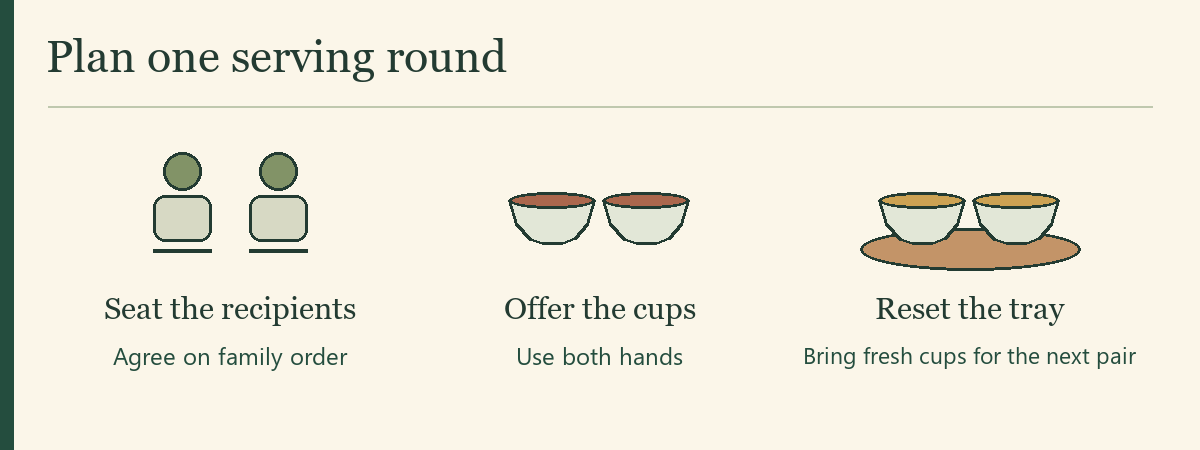
- Invite the guests to their seats. The helper checks their names against the card and gives the couple a moment to greet them.
- Offer each cup. Follow the family's arrangement for who serves whom. Present the cup with both hands, use the agreed family title and invite the recipient to drink. “Mum, please have some tea” is enough when the family speaks English.
- Receive the blessing. Wait for the elder to finish speaking. A red envelope or jewellery may be offered. Thank them and have a designated person take care of gifts once the exchange is complete.
- Reset for the next guests. Return the used cups to their tray. Allow a pause for a photograph or a few words together before calling the next names.
If you are attending as a guest
Ask the host whether you are receiving tea, helping serve it or joining as a witness. If you will receive a cup, a short wish in the language you share with the couple is plenty. If the family plans a gift exchange, ask a relative about local practice in advance. Guests watching can help by leaving the aisle clear and letting the couple hear the person offering the blessing.
Before the day, rehearse a single round with empty cups, from seating the guests to clearing the tray. You will quickly discover whether someone has to turn their back to reach a cup or whether the person calling names is too far away. For the separate pleasure of brewing tea together after the wedding, the introduction to the Chinese tea table explains the everyday equipment.
Words, clothing and gifts
For a Mandarin-speaking family, Māma, qǐng hē chá (妈妈,请喝茶) means “Mum, please have tea.” Substitute Bàba (爸爸) for Dad. A parent can answer in their own words. A Cantonese-speaking family may use entirely different sounds for the same written characters, so use the pronunciation the person knows. A simple greeting said clearly, followed by a pause to hear the answer, makes the exchange feel personal.
Red clothing or a red tea set is a familiar choice in many families. Some couples wear a qipao or a two-piece wedding ensemble; others serve tea in the outfit they already planned for the ceremony. If you are a guest, use the invitation or ask about colour preferences. If the couple expects an elder to fasten a necklace or bracelet, check that the neckline or sleeve leaves enough room. Receive a red packet with both hands, say thank you and put it away to open later. Agree with a trusted helper where gifts will be kept.
The equipment can be modest. For eight relatives receiving one cup each, eight small clean cups and two spares allow a complete round without washing. If both partners present a separate cup to every person, plan sixteen servings instead. Measure what your chosen cups hold at a comfortable fill level, multiply by the servings and brew a little extra. This gives the helper a real quantity to prepare and avoids carrying an overfilled pot through the room.