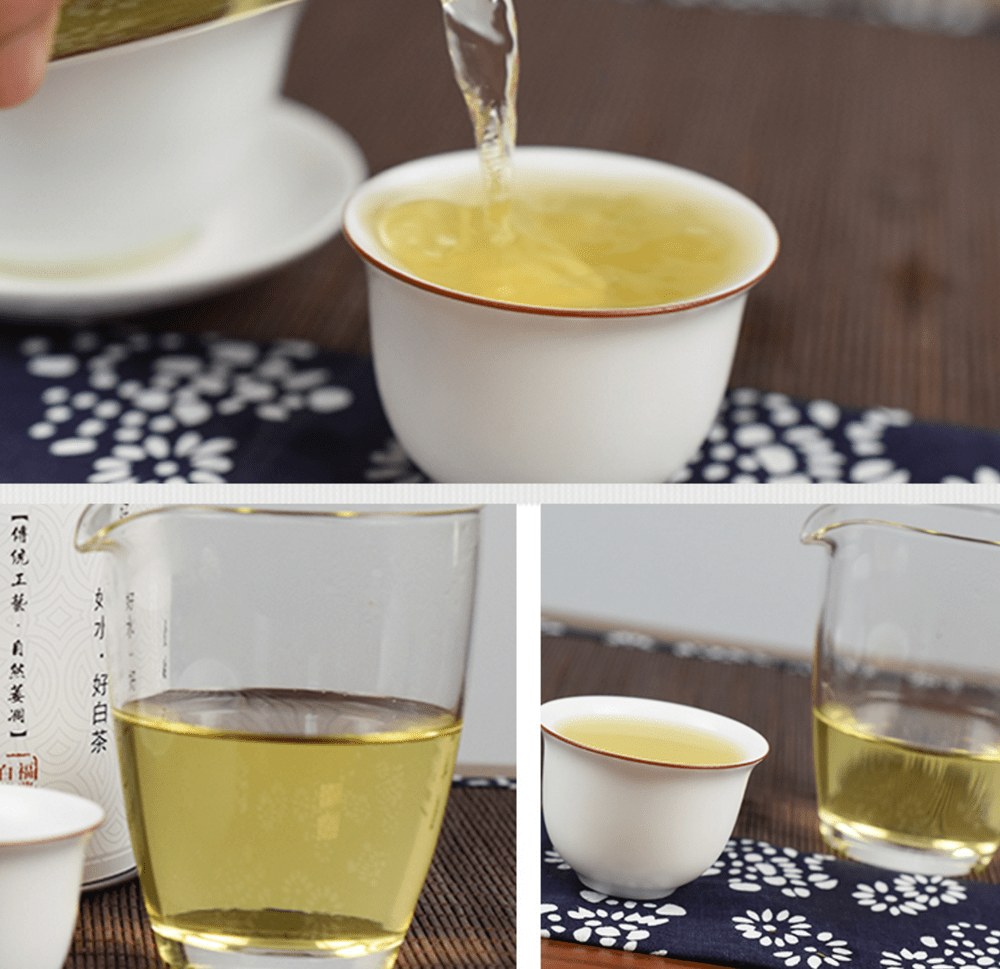
Origin: Fuding, Fujian
Production date: March 15, 2016
Introduction of white peony: white peony is a traditional Chinese white tea. Pick a bud and 1 to 2 leaves of white tea tree in spring. White tea has good anti-radiation and remove toxins from the body.
Production process: use the traditional sun to dry. The temperature of the whole process is not more than 45 degrees, drying for 60 hours, but not more than 72 hours.
Tea soup: its color is light yellow, fragrant and sweet.
Brewing technique: First wash the tea with boiling water, then make tea, and wait for about 10 seconds to drink. It can be soaked more than 5 times.
The 2016 producer’s note above describes a particular batch. Its claims about radiation and detoxification are unsubstantiated.
Understanding White Peony in the cup
White Peony, or Bai Mudan, includes leaves as well as buds. This makes it a useful companion to Silver Needle when learning about white tea. Place a little of each on a plain plate and compare their structure before brewing. The fuller leaves of White Peony offer a different starting point from an all-bud tea, rather than simply representing a less attractive version of it.
White tea making centres on withering and drying. Its open leaf shape can take up considerable space, so a scale is more reliable than judging the portion by how full a spoon appears. Give the leaves room to open, and pour each infusion away from the leaves when the chosen time has elapsed.
The harvest date above belongs to the particular tea originally described. It is not a recommended age for every White Peony you encounter. For another lot, keep its own date and storage information with your notes. Compare the fragrance and taste rather than assuming that an older or newer date must be better.
For an approachable tasting exercise, make two small sessions with the same leaf weight and water volume, changing only the steeping time. Look for the point where the cup has enough flavour without a finish you find drying. Note the result in ordinary language so that you can reproduce it on another day.
Bai Mu Dan in a mug
- Weigh
- 3 g of loose buds and leaves.
- Fill
- 200 ml of water around 85°C.
- Taste
- Check the cup at 2 minutes.
- Drain
- Lift the basket and leave the sprigs intact.
An adjustable starting recipe for a roomy infuser. Use your own packet's guidance when brewing a different lot.
Reading a Bai Mu Dan label
Bai Mu Dan, Baimudan and White Peony are names for the same style of Chinese white tea. The Chinese name is 白牡丹. On a packet of plain Bai Mu Dan, “peony” is the tea's name. You are brewing tea leaves and buds, and peony petals are unnecessary. If you specifically want an unscented tea, the ingredient list will tell you whether a particular blend also contains flowers or flavourings.
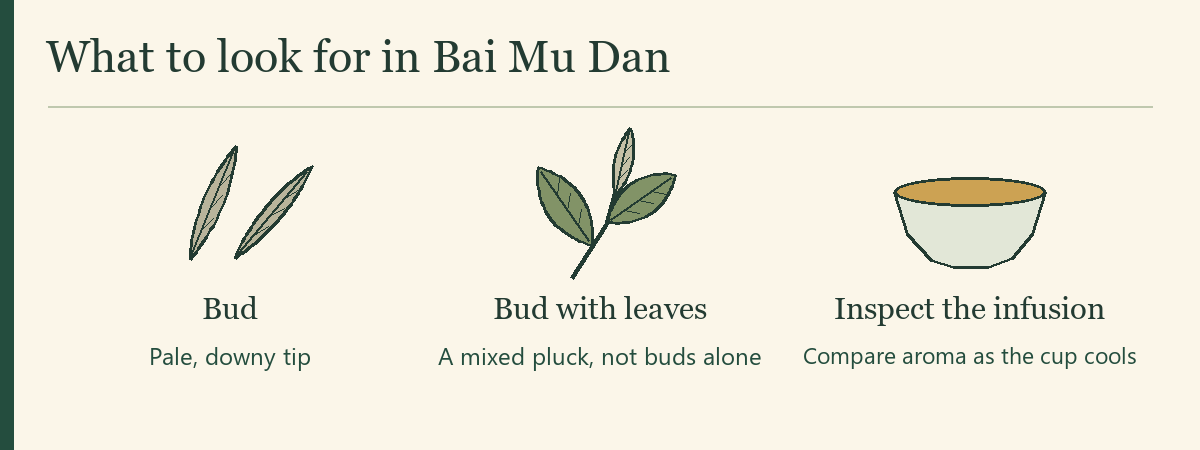
Look at a few dry sprigs on a light plate. The pale, downy central bud and the broader leaves beside it help explain what distinguishes White Peony from Silver Needle. The latter is a useful second tea for a side-by-side tasting. For White Peony, a bud with one or two young leaves is typical. Loose buds or detached leaves can occur when the dried sprigs are packed or handled.
Where White Peony comes from
Fuding and Zhenghe are two traditional white-tea areas in Fujian. You may see either name on a Bai Mu Dan packet, alongside a harvest date and a name such as Da Bai or Da Hao. Fuding and Zhenghe identify places. Da Bai and Da Hao identify tea plants used by growers. The style name alone tells you neither the garden nor the particular bush that supplied the leaves.
To taste the effect of origin, try two spring Bai Mu Dan teas from the same harvest year, one from each area. Choose loose leaf with a similar proportion of buds and leaves and weigh out equal amounts. Differences in the cup are easier to pick out that way. If one sample is a freshly picked loose tea and the other is a years-old cake, the comparison tells you as much about age and storage as it does about place.
How a fresh shoot becomes white tea
After picking, the maker spreads the tender shoots in thin layers so air can pass between them. During withering they gradually lose moisture, the leaf softens and its aroma changes. A maker can move the leaves between sun and indoor racks as the weather changes. Drying finishes the tea. The long wither allows some natural oxidation, which helps explain why an opened sprig may show olive and brown tones beside a silvery bud. Green tea makers heat the fresh leaf early to curb that activity.
If you are comparing Fujian white teas, put a little Silver Needle, White Peony and Shou Mei side by side. At one end you will see mostly buds. In the middle, White Peony shows the bud and young leaf together. Shou Mei generally shows broader, more mature leaves. The different pickings are a clue to texture in the cup. A leafier tea can give the fuller brew you want with breakfast, even if the all-bud tea costs more.
Loose leaf or pressed cake?
Loose sprigs are easy to inspect and portion. Pressed White Peony is the same style of tea packed into a denser form. For a first infusion, use a small piece that separates easily from the edge and weigh it as you would loose leaf. A tight piece needs time to open. Check it after the first pour and shorten the next steep if the opened leaves give up their flavour quickly. A cake can be newly pressed, so check the harvest year separately if age matters to you.
A roomy infuser for a full cup
For a mug or small pot, try 3 g of loose Bai Mu Dan with 200 ml of water around 85°C. Use a basket broad enough for the sprigs to sit without being folded or broken. Pour in the water, taste at two minutes and lift out the basket once the cup tastes balanced. If you prefer a stronger cup, extend the next trial by 30 seconds. This recipe uses more water per gram and a longer steep than the short-infusion preparation described for the Fuding tea above.
A white cup makes it easy to see the pale gold of a light infusion. Take a sip before judging its strength by sight. You might notice hay, flowers or a honey-like aroma. Those are ways of describing a cup and can change with harvest, storage and brewing. As it cools, ask whether the flavour fades immediately or returns after swallowing. A cup can look very light yet leave a distinct finish.
When a brew needs adjusting
If the liquor is watery, first check that the leaves are fully wet. Large open leaves can sit above the water in a shallow strainer. Move them to a deeper basket before adding more tea. If the finish is uncomfortably drying, drain sooner on your next attempt. Keep the leaves unsqueezed as you lift out the basket, then brew them again while the session continues. Stop when a longer infusion no longer produces a cup you enjoy.