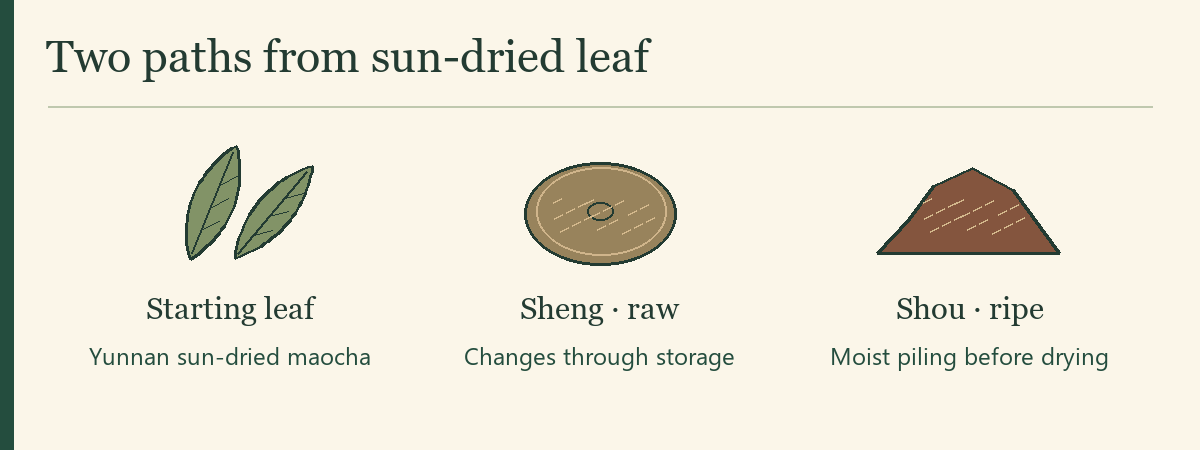
Two cakes of pu’erh can look almost identical in their paper wrappers and taste completely different in the cup. The small characters 生 and 熟 are a better clue than the size or shape of the cake. Sheng (生), usually translated as raw, can be fragrant and brisk when young. Shou (熟), also written shu and translated as ripe or cooked, often gives a deep, mellow cup even when the tea is relatively young.
What happens to the leaf?
Both paths start in Yunnan with large-leaf tea. The picked leaves are heated, rolled and dried in the sun. At this stage the loose material is called maocha. For sheng, the producer can leave it loose or soften it with steam and press it into a cake. A newly pressed sheng is ready to drink. Over time the aroma, colour and balance of bitterness and sweetness can change, at a pace influenced by the conditions in which it is kept.
For shou, the producer adds a stage called wo dui, or pile fermentation. Moisture and warmth in a managed pile allow microorganisms to transform the tea. The material is dried and can then be sold loose or pressed. This gives a young ripe tea qualities that might otherwise suggest age, including dark liquor and an earthy aroma. A thirty-year-old sheng still belongs to the sheng processing tradition. Age alone never turns the writing on its wrapper from 生茶 to 熟茶.
Why make ripe pu’erh?
The modern Yunnan ripe-tea method grew out of work in the 1970s to produce some of the mellow character people sought in stored raw tea on a much shorter timescale. A maker can manage a warm, moist pile over weeks. A collector following a sheng cake watches changes over years. The results can both taste smooth, but the routes leave different signatures. If the flavour of aged sheng is what interests you, include a genuine aged raw sample in the comparison.
Which one should I try first?
| If you enjoy… | Ask to sample… | Look for in the cup |
|---|---|---|
| Bright, lively green teas | A young sheng | A fragrant first sip, some briskness and a finish that may turn sweet. |
| A soft texture and deep, woody flavours | A clean-tasting shou | A round or silky feel and an aroma you enjoy as the cup cools. |
| The idea of a mature tea without storing a cake yourself | A sheng with documented past storage, beside a shou | Smell the empty warm cups after tasting. Which aroma makes you reach for another pour? |
The darkest cup need not be the strongest or most caffeinated. Both teas contain caffeine. The weight of tea you use and how you brew it matter, and neither word on the wrapper measures the caffeine in a serving.
What to look for in the cup
Pour a little of each into white cups. Young sheng often gives pale yellow to gold liquor, with aromas that can suggest fresh plants, flowers or stone fruit. Notice where the briskness sits on the tongue and whether sweetness returns after swallowing. Some sheng is quite bitter. Some is remarkably gentle. An older example may give amber liquor and woody aromas, particularly after warmer or more humid storage.
Shou often looks reddish brown at the rim and much darker in the middle of a deep cup. Look for a clean aroma, then pay attention to texture. One sample may feel light and clear, another dense and almost creamy. Notes reminiscent of wood, cocoa or damp earth are descriptions of a particular cup. They are no substitute for checking the label. The same shou poured into a shallow cup will look lighter than it does in a deep one.
Try a side-by-side brew
Choose a clearly labelled young sheng and a shou. Use similar-sized pieces, as a tightly packed chunk takes longer to open than loose flakes. Two ordinary mugs and removable baskets work well. A starting point is 2 grams per 100 millilitres of water, about 90°C for the young sheng and 95°C for the shou. Taste after about a minute and lift each basket as soon as the strength suits you. Follow the packet if it recommends a different starting recipe.
Smell each cup while warm, then take another sip when it has cooled a little. Write one word each for aroma, texture and finish before making a second infusion. If the sheng feels rough, shorten its steep. If the shou seems thin, look at the wet leaf. A centre that is still tightly compressed may need time to open on the next pour. If you enjoy following each small change, try the same exercise with short gongfu infusions.
Read the wrapper before choosing a cake
Start with the processing term, then look for the region, the year and what that year describes. A pressing date can be later than the harvest. Ask how an older tea was stored, and try a small piece before committing to a whole cake. Two sheng teas bearing the same year can have had very different lives in a cool, dry cupboard and a warm, humid warehouse.
For a first ripe example, look through the Palace Fermented Pu’erh profile. The bowl-shaped Yunnan tea illustrates another way of pressing leaf. If its shape catches your eye, turn the packet over and look for the processing term as well. That little habit will tell you more about the likely cup than a shelf full of cakes in different shapes.
What will change after you bring it home?
A shou that already gives an enjoyable cup can be opened immediately. Keeping it may soften some recent pile aromas, but extra years are no guarantee of a better tea. With sheng, a batch that tastes harsh today has no guaranteed date on which it becomes sweet. If choosing a full cake to drink gradually, buy a flavour you enjoy at its present stage. Keep a note of its condition when it arrives: wrapper, dry-leaf aroma, recipe and taste.
Lift off a modest portion along an existing loose edge, aiming to separate layers rather than grind the leaf into crumbs. A tight cake is a good reason to start with a pre-separated sample. Store drinking portions away from kitchen odours, moisture and heat, labelled with the tea and year. A humidifying experiment in a closed jar can spoil the tea. For everyday handling, see how to store loose leaf tea.