For tea you drink regularly, keep the leaves in a sealed, opaque pouch or a clean, close-fitting tin in a cool, dry cupboard. Measure the tea with a dry spoon and close the packet before you boil the kettle. A clear jar you already own works too if it seals well and lives behind a cupboard door.
Choose the cupboard first
Pick a spot where the temperature stays fairly steady through the day. A high shelf directly above a stove, a sunny counter and the shelf beside a dishwasher vent are poor choices. Open the cupboard and smell it. If curry powder, coffee, scented candles or cleaning products are immediately noticeable, choose another shelf. The point is to keep the aroma of the tea in the packet and the aromas of the room outside it.
Consider where you actually measure the leaves. Keep a dry scoop alongside the tea, measure the portion into your vessel and close the packet. Then take the vessel to the kettle. Reversing those last two steps keeps an open packet out of the plume of steam. Return only dry utensils to the container.
Pick a container that fits the leaf
A sturdy, opaque, resealable tea pouch is often easier to use than a tin. It blocks light, takes up little space and can be folded down as the contents shrink. Brush stray leaves out of the closure before sealing it. For a bag that cannot reseal, put the folded bag inside a clean tin with a close-fitting lid. Check that the tin smells neutral first, especially if it previously held spices or flavoured tea.
A clear glass jar with a good seal can work inside a dark cupboard. On an open shelf, choose an opaque container. Match the opening to the leaf. The long, bulky leaves of White Peony can break when pushed through the narrow neck of a decorative bottle. A wide mouth lets you lift them out without crushing them. Keep the tea name, harvest information and opening date with the container.
Which container should you use?
| What you have | How to put it to use |
|---|---|
| Foil-lined pouch | Run a finger along the zip to seat it all the way across. Ease out spare air without pressing on the leaves. A torn seam or a zip that keeps reopening is a reason to move the tea. |
| Metal tin | Check the lid, especially after a dent. Keep the tea in its sealed pouch inside a decorative tin whose lid just rests on top. |
| Glass or glazed ceramic jar | Check the gasket for cracks and trapped smells. Glass belongs in the dark. With a ceramic caddy, check the lid as carefully as the pot. A loose wooden stopper gives little protection in a damp room. |
| Food-grade plastic box | A clean, odour-free box can protect a closed pouch from crushing on a trip. If yesterday’s food smell lingers, choose another box. A paper envelope on its own offers little protection from damp air. |
Size the vessel with the actual leaf. Thirty grams of rolled oolong and thirty grams of loose White Peony can take up quite different amounts of space. Tip the leaf in gently. If only the bottom of the tin is covered, a smaller tin or the original fold-down pouch leaves less air above it. If you need to push the leaves down to close the lid, use a wider vessel.
Separate the daily portion from the reserve
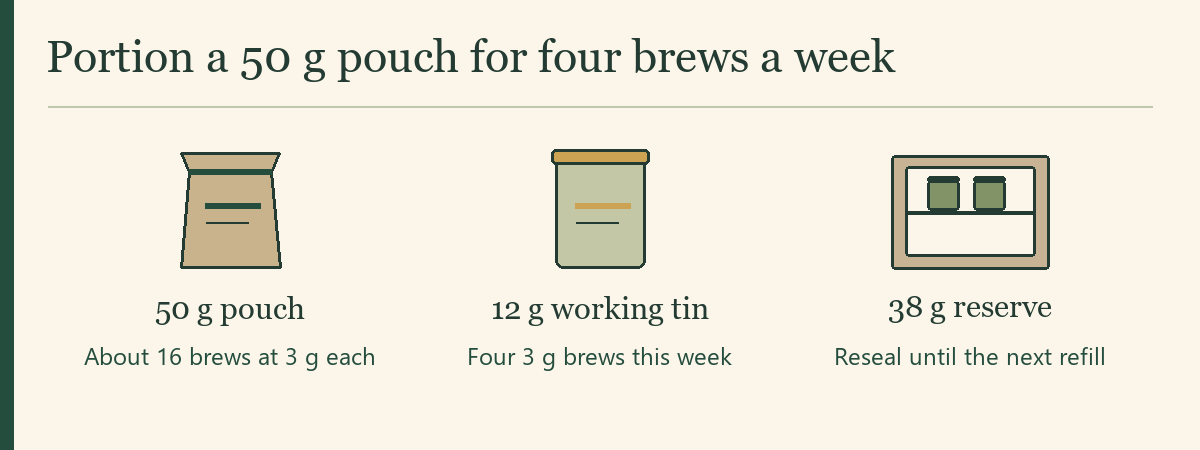
If you drink three grams a day, about 20 grams will cover a week. Put that much in a small working tin and leave the rest sealed. When the tin is empty, wipe away loose fragments and refill it. A few small factory-sealed packs are particularly convenient for a delicate green tea. You can finish one pack before opening another and compare how the aroma changes over a week.
For a large variety of teas, write the opening date where you can see it when you reach for the tin. Give an already-open Longjing priority while its fresh aroma is still vivid. There is little advantage in keeping the last spoonful for a special occasion if it spends months in a partly closed pouch.
How long will an opened packet taste fresh?
Read the packet in three places. A harvest date dates the crop. A best-before date describes the maker’s quality expectation under the stated storage conditions, usually for the sealed pack. Write the opening date on the pouch yourself. That tells you how long this particular tea has been exposed to your kitchen. Follow any use-by date and any instructions for the opened pack.
For a delicate green tea, think in weeks once it is open. As a buying example, a 50 g pouch makes about sixteen 3 g brews. At four brews a week that is roughly a month. A 200 g bag at the same pace means opening it for almost four months. If you like the first few cups best, smaller sealed packs will do more for your next purchase than a more expensive jar.
| Tea on your shelf | Which to reach for first, and why |
|---|---|
| Green, yellow and powdered green tea | Prioritise opened fresh styles, especially a new-season Longjing or a tin of matcha. Keep powder tightly closed between scoops. Use the maker’s after-opening guidance where available. |
| White tea and light oolong | If you bought them for a fresh floral aroma, drink them while that fragrance is clear. An intentionally aged white tea is a different purchase. Keep its harvest and storage notes with it. |
| Black tea and roasted oolong | These are reasonable candidates to drink after your most delicate opened green. A roasted Wuyi tea still deserves a good seal. Revisit the aroma of the warm leaves to see whether you still enjoy this batch. |
| Jasmine, herbs and flower blends | Keep each scent in its own pack. For blends with fruit, peel or other ingredients, follow the date and storage advice for the whole blend. |
| Pu’erh and other dark teas | Keep the wrapper and distinguish tea you are drinking now from a cake bought for ageing. Age alone tells you little about how well it was stored. See raw and ripe pu’erh for the difference. |
Should you refrigerate or freeze loose leaf tea?
For an opened packet you use regularly, a cool, dark cupboard avoids repeated changes in temperature. If the producer recommends cold storage for an unopened, moisture-proof packet, follow those instructions. When you take it out, leave it sealed until it reaches room temperature. Opening a cold packet straight away allows moisture from warm room air to condense on the leaves. Keeping the packet sealed also protects it from food smells while it warms.
The same condensation problem applies to a freezer. If the maker gives freezing instructions for a sealed reserve of green tea or matcha, use unopened portions you can take out one at a time. Let the entire portion warm up while sealed. Keep a daily tin at room temperature and avoid repeatedly chilling and warming the same leaves.
What if the whole kitchen is hot or humid?
Check your chosen cupboard just after cooking or running the dishwasher. A shelf that feels warm or gets a puff of steam when the door opens is a poor home for tea, however dark it looks in the morning. A drawer in a cooler room can be better, provided it is dry and free of scented soap or laundry products. In a humid season, fill a small working pouch in that room before taking it to the kitchen. The reserve then stays closed through many kettle boils.
What about jasmine and ageing teas?
Keep jasmine tea in its own sealed container. Citrus peel, spices and smoke can carry over too. Before reusing an empty tin for plain tea, leave it closed for a while, then open and smell it. A lingering orange or jasmine aroma is a good reason to keep that tin for the same kind of tea.
A compressed pu’erh intended for long storage presents a different question from keeping this month’s green tea fresh. Keep the wrapper and its provenance, protect the cake from liquid water and household odours, and follow advice for that particular tea and local climate. For a cake you are drinking now, separate a modest portion so you can leave the rest undisturbed.
Is the tea faded, or should you throw it away?
Dry leaf with a quieter aroma. If the packet has stayed dry and intact, the label permits use and there are no signs of spoilage, brew a small cup using your usual measure and time. A familiar tea that now tastes dull or papery may simply have lost the character you liked. Breathing in the aroma of the brewed cup is more informative than judging by leaf colour alone. A naturally brown roasted oolong and a pale green tea start from very different places.
Wet leaves, visible mould or a persistent musty smell. Discard the contents of that container. Do not taste a suspect batch, pick out a clean-looking portion or try to rescue it by rinsing, roasting or cooking. Clean and thoroughly dry the container and lid before refilling. With a compressed tea, tightness alone is normal. If you cannot distinguish an unfamiliar growth from spoilage, set the tea aside and ask the supplier before using it.
Still sound, just past its aromatic peak? Brew a little black tea and try the liquor as a poaching liquid for pears, or chill the brewed tea for an iced drink. Taste it plain first. If you no longer enjoy it, compost the plain leaves where local collection accepts them. Making another use of faded tea is a choice about flavour and applies only to a sound batch.
Packing tea for a few days away
Count the sessions you expect to brew, then pack that amount. For three mornings at 3 g per cup, a 9 g portion leaves the rest of the packet at home. Put fragile leaves in a small rigid tin or protect a sealed pouch inside a clean box. Individually wrapped tea bags can travel in their wrappers. Loose, unwrapped bags need the same dry, closed storage as loose leaves. Keep soap and perfume in a different part of the bag.