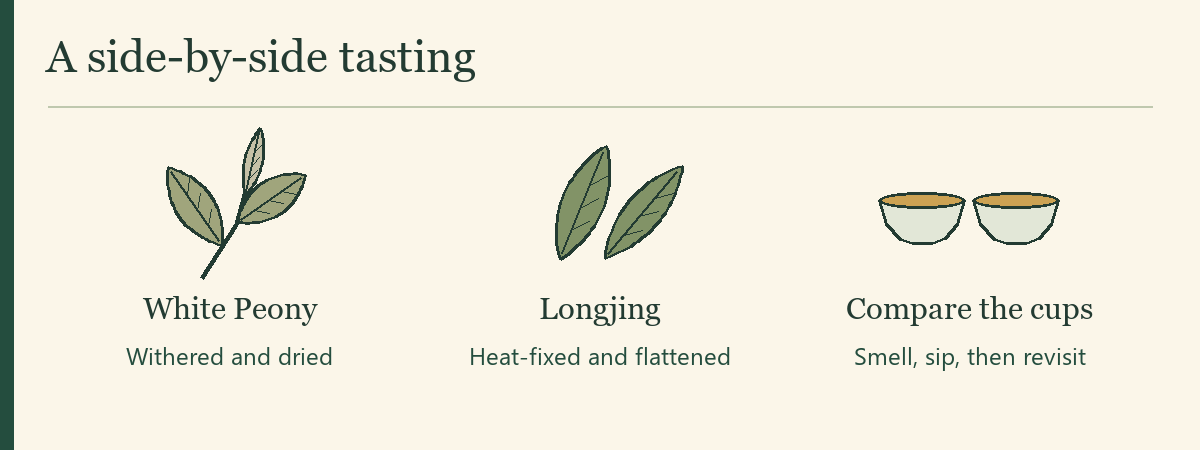
White tea and green tea can both look pale gold in a cup. The difference is easier to understand with two handfuls of leaf. In a loose White Peony, silvery buds lie among open, papery leaves. In Longjing, the shoots have been pressed into narrow, flat blades. One pair gives you a way to see, smell and taste two different approaches to making tea.
What happens to the fresh shoots?
Traditional white tea depends on a carefully managed wither. The maker spreads out the shoots and allows them to lose moisture, monitoring how they soften before drying them. Changes in the leaf continue through the wither and help build the finished aroma. A loose White Peony, also called Bai Mu Dan, usually includes both buds and leaves. Their different shapes and textures remain visible in the dry tea.
Green tea receives heat early in its manufacture to limit enzymatic oxidation. In Longjing production, pan heating and shaping give the leaf its flattened form. Other green teas are shaped differently and some are steamed. The common thread is that early heat treatment. A pale downy bud can be used in either family. Reading how the tea was made tells you more than examining the colour of the bud.
What might you taste?
A young White Peony can have a gentle aroma of hay, wildflowers or honey. Longjing often suggests fresh beans or warm chestnuts, sometimes with a savoury edge. Taste those words as possibilities. One packet might offer a prominent floral aroma and another little more than a clean sweetness. When you take notes, using the name of a food you actually recognise is more helpful than borrowing a description you cannot find in the cup.
Pay attention to texture as well. A cup can smell delicate yet feel quite full in the mouth. A brisk edge in green tea can be refreshing with a meal, while a softer cup might be your choice for drinking by itself. Either tea can become drying if it steeps too strongly. The time between pouring and drinking also matters because a hot cup and a comfortably warm cup can give quite different impressions.
A two-cup tasting for the kitchen table
- Use two similar cups and roomy infusers. Place 2 grams of each loose tea in its own infuser. White Peony can occupy much more space on the spoon than Longjing, so weighing helps you compare portions without crushing the larger leaves.
- For the Longjing, use 200 millilitres of water at about 80°C and taste at 90 seconds. For the White Peony, try 200 millilitres at about 85°C and taste at two minutes. Adjust for your particular packets.
- Lift the infusers out when each cup tastes pleasantly full. Give both drinks time to cool. Smell each set of warm, wet leaves, then taste the cups alternately. Compare the first aroma, the feel of the liquid and what lingers after a sip.
- Make a second infusion with the same leaves. If a tea is weak, steep it a little longer. If the next sip leaves your mouth rough, shorten the following brew. Record a separate setting for each tea.
Using different temperatures lets each tea show its character in a comfortable cup. For a second experiment, use fresh leaves and change just one setting for one of the teas. For example, give Longjing an extra half-minute at the same temperature. You will hear the word “bitter” used for several sensations. Notice whether extra time brought a sharper taste, a drier feeling on the tongue, or simply a fuller cup.
Which has more caffeine?
A pale Silver Needle can contain appreciable caffeine, and a green tea can contain less than a particular white tea. In one laboratory comparison, servings of commercial white, green and black teas contained 14 to 61 milligrams of caffeine. The researchers used six- or eight-ounce servings and found no consistent ranking by tea colour in their samples. That range describes their drinks. It cannot tell you the amount in a mug made from your leaves.
For a smaller caffeine serving, make your usual infusion and pour a smaller cup. A weaker-tasting cup brewed from different leaves is harder to judge. If you want a drink naturally free of caffeine, check the ingredients for a plain herbal infusion such as peppermint.
Does one have more antioxidants?
Both teas contain catechins, including EGCG. In a laboratory comparison of commercial green and white teas, the researchers found substantial variation within both groups. Counting the steps in the tea factory therefore gives you little basis for choosing the packet richest in catechins. Those measurements also describe the samples in the lab. They cannot establish that drinking one of the two teas gives a person a better health outcome.
Which tea should you choose?
Begin with White Peony if you enjoy a floral aroma and want to watch whole leaves open in the infuser. For a green tea with a distinct savoury or nutty side, begin with Longjing. If you are comparing prices, first check the picking and the weight of the packet. A bud-only Silver Needle and a mixed bud-and-leaf White Peony are quite different purchases within the white family. A 20-gram sample of either tea gives you ten two-gram portions for the tasting above.
Two small samples will teach you more about your preference than a large packet chosen from a colour description. Once you have a favourite, try a second tea in that family. Silver Needle offers an interesting comparison to White Peony because of its bud-focused picking. If you preferred the green tea, try Taiping Houkui and compare its long leaves with the flattened Longjing. Keep your first tasting notes nearby so you can recognise what changes.