A gaiwan is a lidded bowl, often paired with a saucer. Used for brewing, the bowl gives the leaves room to open and the lid holds them back as you pour. The first skill to learn is emptying the bowl comfortably. Put the kettle aside for the first few minutes and practise with cool water. You can see the path of the stream and find a grip that suits your hand before heat enters the picture.
Set out the bowl and receiving cup
Choose a stable table and a pitcher or cup large enough to hold the whole pour. Start with the empty gaiwan. Set the lid in the bowl, then try lifting the bowl a few centimetres by its flared rim. For the grip described here, the saucer stays on the table. If you must stretch your hand wide, or your fingers slide down onto the sides, try a smaller bowl or one with a deeper flare.
Pour cool water into the bowl, leaving a dry band below the rim. Fit the lid and check that it can rock a little without falling through. A gaiwan's stated capacity may be its volume filled to the top. Measure the water you actually use by pouring it into a measuring cup. That smaller working volume is the figure to use with a recipe.
Which gaiwan should a beginner use?
A glazed porcelain bowl is a useful first choice for tasting different teas: it rinses clean, and a pale interior makes it easy to see the liquor and the leaves. Glass lets you watch leaves unfurl from the side, but a thin rim may heat quickly. Unglazed clay calls for different care and can retain aromas. For frequent switches between roasted, floral and jasmine teas, reach for a glazed bowl. Handle the empty vessel before deciding which is easiest to control.
Consider where the tea goes after the pour. A gaiwan giving 90 ml at your usual fill will make three small 30 ml servings, or one larger tasting cup. A small pitcher mixes the beginning and end of the infusion so every guest gets similar strength. Brewing alone, you can pour straight into a cup that holds the entire infusion. A towel beneath the vessels makes an ordinary table easier to manage.
Find the grip and the gap
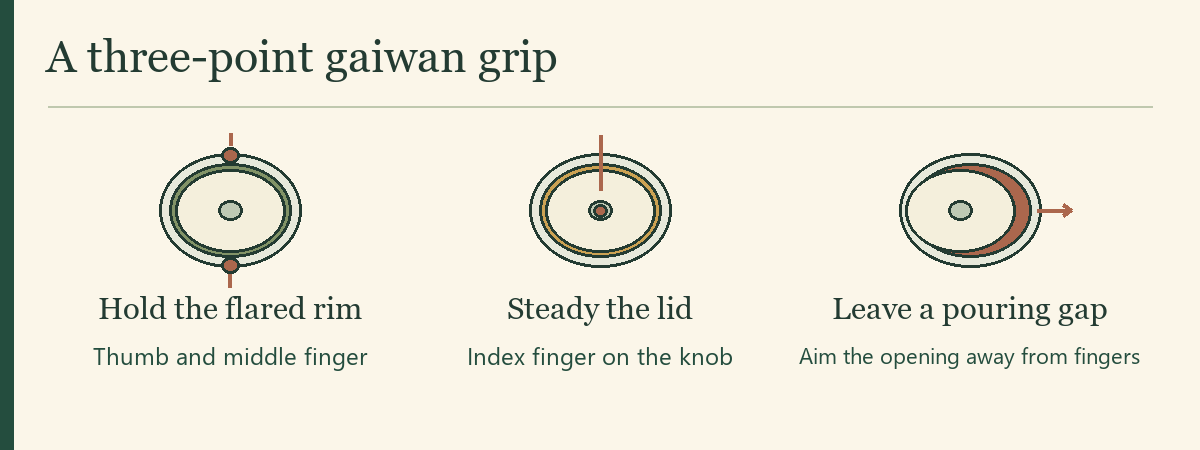
- Hold the rim on opposite sides. Put the pad of your thumb on one side of the flared rim and your middle finger opposite. Keep them high on the edge. The lower wall of a hot bowl is a difficult place to hold.
- Steady the lid. Rest your index finger lightly on the lid knob. Keep your fingertip clear of the underside and the opening where steam can escape. Use just enough pressure to keep the lid from sliding as the bowl tips.
- Make a pouring opening. Set the lid slightly askew so there is a narrow gap on the side facing the pitcher, away from your fingers. Look across the rim to see where the water will leave. Set the bowl down to adjust the opening whenever you need to.
Practise the pour with cool water
Bring the bowl close to the pitcher and tilt towards the gap. Start with a small tilt, then increase it steadily as the bowl empties. Keep the lip low enough that the stream lands inside the pitcher. Return the bowl upright before moving it back to its saucer. Repeat with a slightly wider gap, then a narrower one. A trickle that takes a long time to empty usually means the gap is too small. If water sloshes out in a sheet, make the opening smaller or tip more gradually.
Now add a few spent leaves, if you have them, and repeat the exercise. Watch where they gather behind the lid. Large intact leaves may stay in the bowl even with a fairly open gap. Fine fragments may slip through a narrower one. Place a strainer over the pitcher if needed so you can keep a comfortable, steady pour.
Make a first hot infusion
Choose a tea whose brewing instructions you know. For one starting example, a small gaiwan holding about 100 ml of water can brew 5 g of oolong with water around 95°C. Have the pitcher in place before adding water. Start counting when water meets the leaves and begin pouring around 15 seconds later. Let the liquor drain into the pitcher, then share it between the cups. Times and temperatures can change with the leaf, the amount you use and how quickly your gaiwan empties.
If the rim feels uncomfortably hot, set the bowl down. Leave it until you can handle it comfortably. On the next round use a lower fill level and check that the rim is dry. Practise the motion again with cool water if the lid slips. A basket infuser is an easier choice for a particular session if the vessel is still awkward to hold.
Let the pour guide the next steep
Compare two consecutive infusions. If the first tasted good and the second is weak, lengthen the next steep a little. If one is unexpectedly strong, look at how long it took to empty. Tea continues to infuse while it drains. A leaf blocking the gap can turn a short steep into a much longer one. Note both the time you began pouring and whether the stream ran freely. The gongfu tea guide takes this further with a full brewing session, and the Da Hong Pao guide offers a recipe for another Wuyi oolong session.
Do you need to rinse the leaves?
Warming the bowl and rinsing the tea are two separate actions. To warm the bowl, add hot water before the leaf, then pour it away and dry the outside before handling. A leaf rinse is optional. A quick wetting can help a tight rolled oolong or a piece of compressed tea begin to open. For a tender green tea, try keeping the first infusion to taste its lighter opening aroma. Rinsing cannot make damaged or mouldy leaf suitable to drink.
Can you drink directly from the gaiwan?
Yes. Use a smaller quantity of leaf than for a concentrated sequence of short gongfu infusions because the leaf will stay in the water while you drink. Let the liquor cool and use the lid to hold floating leaves back. Raise the bowl with its saucer supporting it and take a small sip through a narrow opening. If the vessel feels awkward to lift, pour into a separate cup. A saucer useful for sipping can stay on the table for the one-handed brewing grip above.
After the last infusion
Let the vessel cool before emptying it. Tip the leaves into a strainer or compost container and rinse away fragments caught at the rim. Wash glazed porcelain or glass according to the maker’s care instructions, rinse thoroughly and dry the lid and bowl separately. Keep the set where the lid cannot slide off a stack. For unglazed clay follow its specific cleaning guidance. A clean dry rim makes the first pour of the next session easier to control.