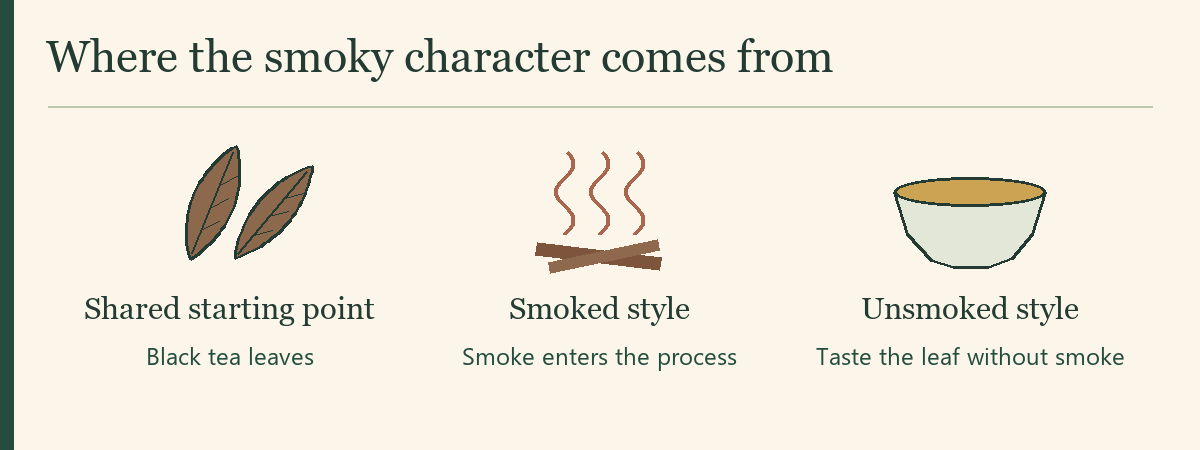
Open a packet of smoked Lapsang Souchong and the scent may reach you before the kettle boils. Open an unsmoked one and you might find a quieter aroma of fruit and wood. Both names appear on teas from the Tongmu area in the Wuyi Mountains of Fujian. The family name in Mandarin is Zhengshan Xiaozhong, also written Zheng Shan Xiao Zhong. Knowing whether a tea was smoked is the first step towards choosing the cup you actually want.
What pine smoke adds
In a traditional Tongmu smokehouse, a pinewood fire burns below the upper floors where leaves are spread. The rising warmth helps remove moisture, and smoke reaches the leaves as they wither or dry. A tea can acquire its pine aroma this way with only black tea on the ingredient list. The leaf picks up aromatic compounds from the smoke. It also goes through the changes that make it black tea, including rolling and oxidation. Those processes account for flavours underneath the smoky aroma. In some batches the first impression is pinewood, followed by a suggestion of sweet dried fruit as the cup cools. Others have a much more assertive campfire character.
Dry leaves can smell surprisingly powerful in a newly opened packet. Judge the balance in the brewed tea. Take a sip after the steam has settled and notice what you can taste after swallowing. A smoky fragrance can accompany a soft, sweet cup. A mouth-drying sensation along the gums is a separate impression, and changing the brew time can affect it.
What to expect from unsmoked tea
An unsmoked Xiaozhong is made without the intentional pine smoking. It can be fragrant in its own right. Look for the difference between the smell rising from the cup and the flavour that stays on your tongue. Some examples recall dried longan, a small, sweet fruit often used as a tasting reference. A reference to longan in tasting notes can describe the tea alone. The ingredient list will tell you if fruit has actually been added.
For someone who enjoys Chinese black tea but finds smoke overpowering, an unsmoked example is a good place to begin. The Wuyi area also produces Jin Junmei, a distinct black tea associated with fine buds, and roasted oolongs such as Da Hong Pao. Asking about the type of tea as well as the place prevents an easy mix-up.
Read the packet before brewing
Look for the origin, the smoking method and a description of the particular batch. A named village gives a more specific origin claim than “Fujian.” If you care about the character of traditional pine smoking, check for a clear account of how the leaves were exposed to smoke. A product made with added smoke flavouring can smell intense, too. Aroma alone cannot establish how it was made or where the leaf was grown.
A first brew in a mug
- Use a roomy basket infuser or small pot. For whole leaves, start with 2 grams of tea and 200 millilitres of water at about 90°C. Follow the packet if the maker recommends a different starting point.
- Pour the water over the leaves. At two minutes, taste a little from a spoon. When the strength suits you, lift out the basket or pour the whole infusion into a cup.
- Let the tea cool until you can sip comfortably. Smell the cup again, then compare your impression of the aroma with the taste.
- For a thin brew, give the next infusion a little more time. If the first cup was drying, try a shorter first steep next time. Fine broken leaves may release flavour sooner than whole twisted strips.
If you like to sample several infusions in one sitting, use the small-vessel approach in the gongfu brewing guide. Keep the first pour short and empty the brewing vessel between rounds. Watch for the balance of smoke and sweetness to change as the leaves open.
How strong should a smoked Lapsang be?
For a fuller breakfast cup, try freshly boiled water on a second portion of the same leaf. Taste after two minutes, and then every 30 seconds until the black tea has enough body to carry the smoke. A robust smoked blend may suit a four-minute infusion. If a little milk is how you usually drink black tea, divide the finished brew between two cups and add a splash to one. You can tell immediately whether you prefer the softer texture or the clearer aroma of the plain cup.
Smoked and unsmoked Lapsang both contain caffeine from the tea leaves. The intensity of the smoke gives no measure of it. If you want a gentler pine aroma and still want a full cup, blend a pinch of the smoked leaf with a plain black tea before brewing. Shortening the steep alone can leave you with a thin cup that still smells strongly of smoke.
Serving it with food and using it in the kitchen
Try a smoked cup with a mushroom omelette or roasted sweet potato. The browned edges and sweet centre of the potato give you two different bites to taste against the same tea. To use the tea as seasoning, brew it plain and strain it. Add a tablespoon to a pan of sautéed mushrooms with a little stock, let the liquid cook down briefly and taste before adding more. A strongly smoked batch can carry a whole dish with very little liquid. For the fruit and honey notes of an unsmoked batch, pour a fresh cup alongside a plain butter biscuit.
Try the two styles together
Put an unsmoked sample on the left and a smoked sample on the right. Weigh equal portions and use separate, clean cups and infusers. Smell the unsmoked tea first so that a strong pine aroma is less likely to dominate your first impression. Try each cup warm, then return to them once they have cooled a little. Write down one aroma, one texture and one detail of the finish for each. Two batches can differ in leaf and harvest as well as smoking, so your notes describe these particular cups.
Seal the smoked leaves in their own packet after the session. A loose lid can perfume a neighbouring green or white tea. If you enjoyed the sweetness more than the smoke, compare the unsmoked cup with Keemun black tea on another day. That pairing gives the subtler aromas room to stand out.