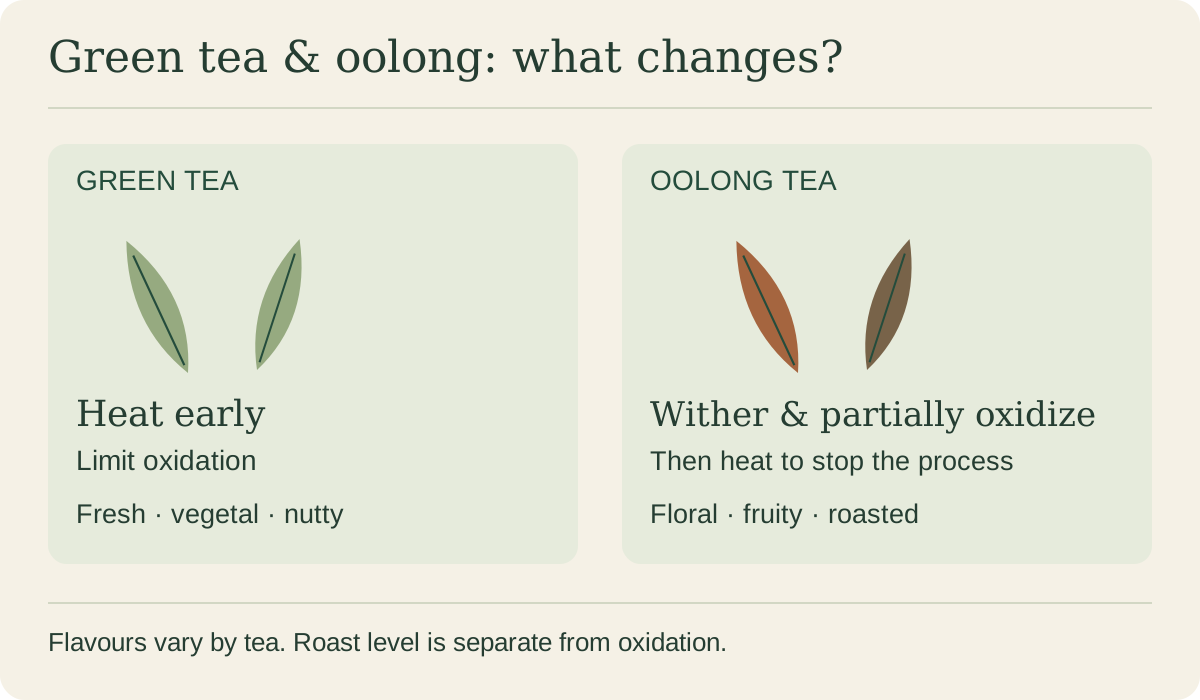
Oolong and green tea come from the same tea plant, Camellia sinensis, but the leaves are handled differently after picking. Green-tea production limits oxidation early. Oolong production allows a controlled period of oxidation before the leaves are heated to halt the enzymatic process. That difference helps explain the range of aromas in the cup, although it is only part of the story.
For drinking, the most useful question is which flavours you enjoy. A fresh, lightly processed green tea, a floral oolong and a dark roasted oolong can offer three very different experiences. Treating all oolong as one taste makes choosing harder than it needs to be.
The main differences at a glance
| Feature | Green tea | Oolong tea |
|---|---|---|
| Processing | Heated early to limit oxidation, then shaped and dried | Withered and manipulated to encourage partial oxidation before heat fixing, shaping and drying |
| Typical flavour range | Fresh, vegetal, savoury, nutty or lightly sweet | Floral, fruity, creamy, honeyed or roasted, depending on the style |
| Appearance | May be flat, curled, needle-shaped or otherwise formed | Often rolled into compact shapes or twisted into strips |
| Brewing approach | Start gently with cooler water for delicate leaves | Often suits hotter water and several short infusions |
| Useful first comparison | A Chinese green tea such as Longjing | A lightly roasted or unroasted floral oolong |
These are broad tendencies. A dry leaf's colour does not tell you everything about its processing, and a pale cup is not automatically weak. The harvest, cultivar, growing conditions and the maker's choices all contribute to the final tea.
What oxidation actually changes
When leaf cells are damaged during processing, compounds within the leaf interact with oxygen through enzyme-driven reactions. Tea makers manage those reactions through handling, resting and heat. For green tea, early heating preserves much of the fresh-leaf character. For oolong, withering and controlled bruising help develop a different aromatic profile before the fixing stage.
Oolong is therefore not a mixture of green and black tea. It is a distinct family of teas, with its own production methods and a wide range of styles. Nor does a quoted oxidation percentage give you a precise tasting prediction. Such figures are often estimates rather than measurements supplied for the particular batch.
Roasting is a separate consideration. Two oolongs with similar oxidation can taste different if one receives a stronger roast. When selecting tea, ask about roast as well as oxidation. The phrase “light oolong” can otherwise leave you guessing whether someone means pale colour, low oxidation, a gentle roast or simply a mild cup.
How do the flavours compare?
Chinese green teas can suggest tender vegetables, fresh beans, chestnuts or a gentle savoury sweetness. These are tasting descriptions, not ingredients added to the leaf. Some cups are brisk and refreshing; others feel soft and rounded. A green tea that tastes aggressively bitter may need a brewing adjustment before you decide the whole category is unsuitable.
A lightly oxidized oolong can have pronounced floral aromas and a fuller texture than you expect from its pale liquor. More oxidized or roasted examples may move towards fruit, honey, toasted nuts or deeper baked notes. A dark roast should not be assumed to represent every oolong, any more than a strongly brewed green tea represents every green.
Compare aroma and texture separately. One tea may smell more expressive but feel lighter in the mouth. Another may be quieter on the nose yet leave a longer finish. You do not need a specialist vocabulary: “fresh,” “toasty,” “soft” and “drying” are perfectly useful observations.
Brewing a fair comparison at home
Use the same water and two similar cups, but give each tea brewing conditions suited to it. For a simple infuser tasting, an approachable starting point is 2 grams of leaf per 200 millilitres of water. Try the green tea around 80°C and the oolong around 95°C, tasting at about two minutes and removing the leaves when you like the strength. The packet's instructions should take precedence for an unfamiliar tea.
This is a starting experiment, not a laboratory comparison or a universal recipe. If the green tea is thin, increase its time a little on the next attempt. If the oolong is drying, shorten the infusion. Avoid judging one tea from a balanced cup and the other from an oversteeped one.
Pour both into plain cups and let them cool enough to taste comfortably. First notice the aroma, then take a small sip, then return to the other cup. Finally, taste again as they cool. Write a few words about each before reading elaborate tasting notes that might lead your expectations.
Which should you choose?
Start with green tea if fresh, vegetal or nutty flavours appeal to you. Try a floral oolong if you want a fragrant cup with room to explore repeated infusions. If you prefer toasted or deeper flavours, choose a roasted oolong and keep its roast level in mind when comparing it with other teas.
Both contain caffeine; the category name alone does not reliably tell you how much will be in your prepared cup. Leaf quantity and brewing choices matter, so neither should be treated as a caffeine-free option.
For a useful introduction, choose one clearly identified example of each rather than a large mixed assortment. Keep the packaging, note the harvest and preparation, and repeat the tasting once you have adjusted the brews. Your preference may change with the season, the meal or simply the sort of cup you want that day.